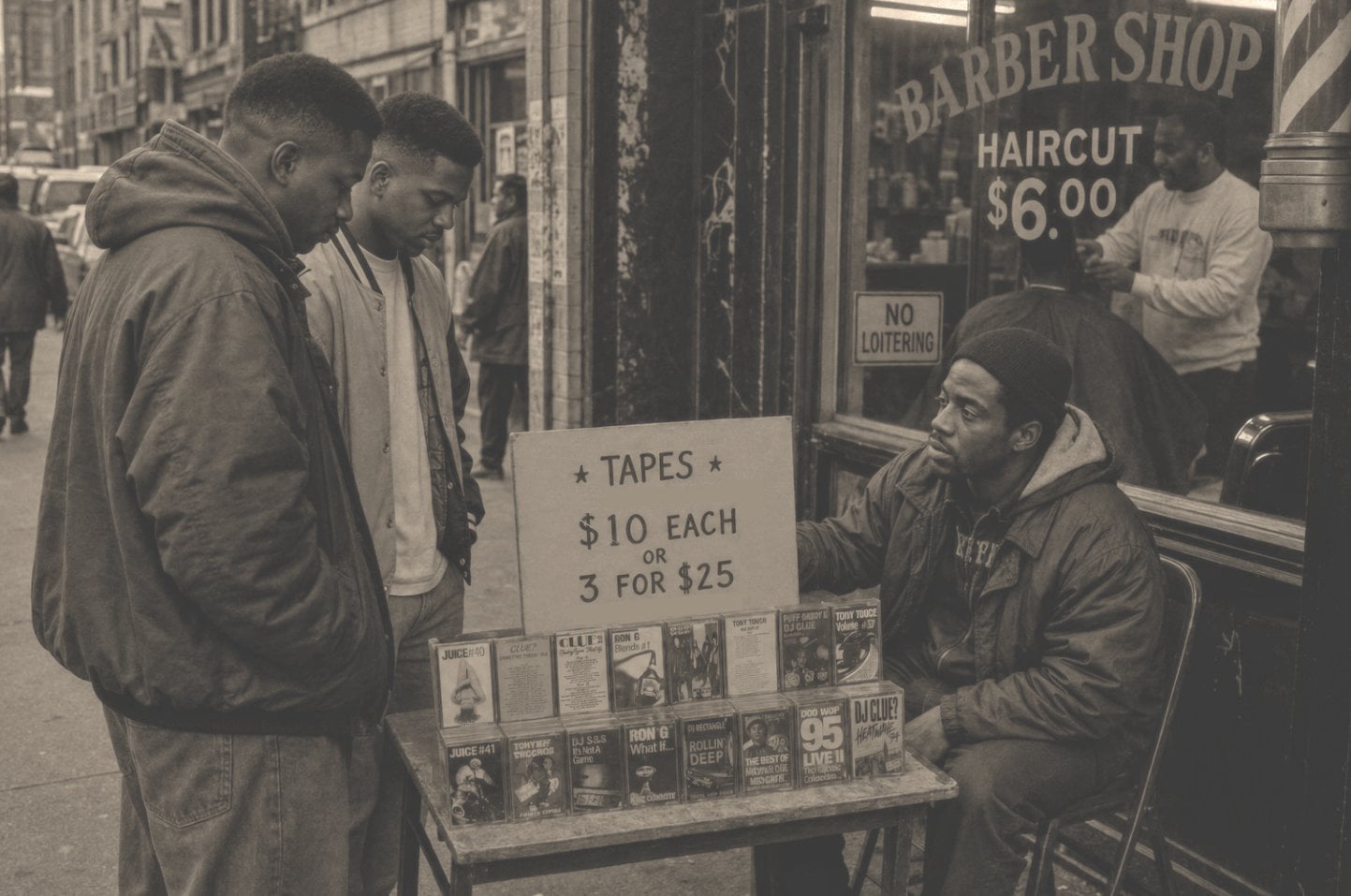
The record industry responded with cease-and-desist letters, warnings to venues and police action. But the mixtape phenomenon continued to grow, and by the 2000s the cassette had increasingly given way to the CD. The basic copyright problem remained the same, but the scale became much larger.
Mixtapes had evolved from DJ performances and multi-artist compilations into major promotional vehicles for individual rappers. DJs such as DJ Clue, DJ Whoo Kid and DJ Drama could build enormous audiences, while artists used mixtapes to release new songs, freestyles and alternative versions of their music between official albums.
The business was no longer simply a handful of DJs selling homemade cassettes on street corners. By the middle of the 2000s, estimates suggested that 30 to 50 million mixtapes were being sold every year, generating an estimated $150 million to $250 million annually. The record industry continued to benefit from the exposure, but the money involved made the legal situation increasingly difficult to overlook.
That came to a dramatic head on January 16, 2007, when Atlanta DJs DJ Drama and DJ Don Cannon were arrested on federal racketeering and bootlegging charges. Authorities, backed by the RIAA, raided their Atlanta studio and confiscated more than 80,000 CDs, along with thousands of dollars' worth of cash, recording equipment and other assets. The raid sent shockwaves through the mixtape industry.
DJ Drama was one of the biggest names in the business, and his Gangsta Grillz series had become one of the most influential mixtape brands in hip-hop. His tapes had helped build the profiles of artists including T.I., Young Jeezy and 50 Cent, demonstrating exactly why record companies and artists had tolerated and sometimes encouraged the mixtape culture for so long. Yet the authorities were now treating the business much more seriously.
The use of federal racketeering charges was particularly startling. RICO the Racketeer Influenced and Corrupt Organizations Act is legislation more commonly associated with organised crime than DJs and mixtape distributors. Drama and Cannon became known as "mixtape martyrs", with many in the hip-hop community believing they had been singled out for participating in a system that the music industry had tolerated for years.
The raid effectively froze the mixtape business for a time. Websites and distributors reconsidered how they operated, while DJs began looking for new ways to build their careers without exposing themselves to the same risks.
The irony was impossible to miss. The record industry had spent years recognising mixtapes as an incredibly effective form of grassroots marketing. Labels were reportedly spending thousands of dollars financing tapes and paying DJs to host them, while simultaneously having lawyers investigate the copyright implications. In other words, the industry had helped create a system in which promotion and piracy had become almost impossible to separate.
The charges against Drama and Cannon were eventually dropped in 2009, but the damage had been done. The raid marked a turning point. The old street-mixtape economy did not disappear overnight, but the business model began to change rapidly.
Digital distribution provided a new route forward. Websites and online platforms could distribute mixtapes to enormous audiences without the costs of manufacturing and physically distributing thousands of CDs. At the same time, artists and DJs increasingly found ways to make mixtapes legally, using authorised material, original productions or promotional releases supplied with permission. The mixtape therefore survived - but its relationship with copyright changed.
From the homemade cassette sold for $20 on a street corner to the multimillion-dollar CD business of the 2000s, the same fundamental question remained: who had the right to reproduce the music? The answer was always dependent on permission. A mixtape could be a brilliant piece of DJ creativity and an enormously effective promotional tool, but that did not automatically give the creator the legal right to reproduce somebody else's copyrighted recordings and sell them.
That is what makes the history of mixtapes so fascinating. They were simultaneously promotional tools, underground art, commercial products and copyright infringements. The record companies needed DJs to break new records. DJs needed the record companies' music to make their tapes. Artists benefited from the exposure, while distributors and tape sellers could make substantial profits. Yet the same industry that benefited from the culture was also responsible for shutting down the operators who pushed it too far.
The 2007 raid on DJ Drama and DJ Don Cannon demonstrated just how far that tension could go. By then, mixtapes were no longer merely a peripheral part of Hip-Hop - they had become a huge shadow economy worth hundreds of millions of dollars.
The cassette era may have started with DJs simply wanting to capture the energy of their performances, but mixtapes eventually became one of the most powerful promotional and distribution systems Hip-Hop had ever created. They may not always have been legal, but their impact on hip-hop was undeniable.