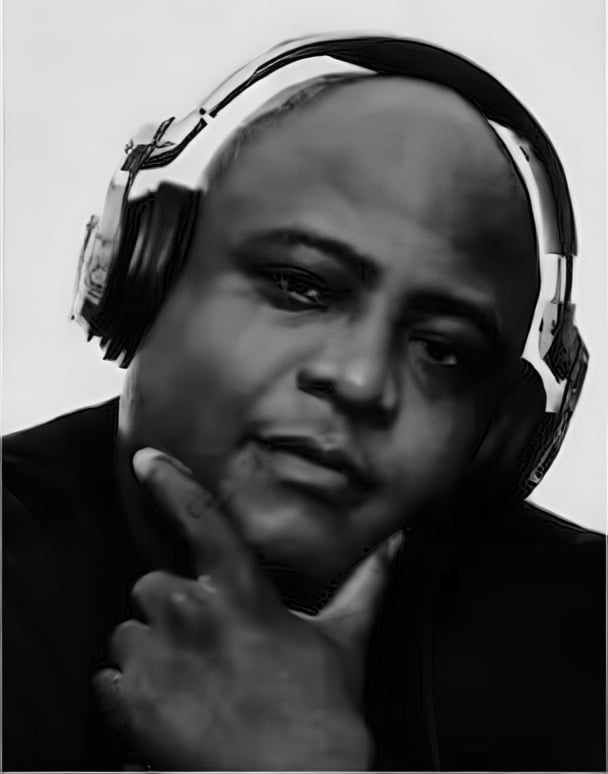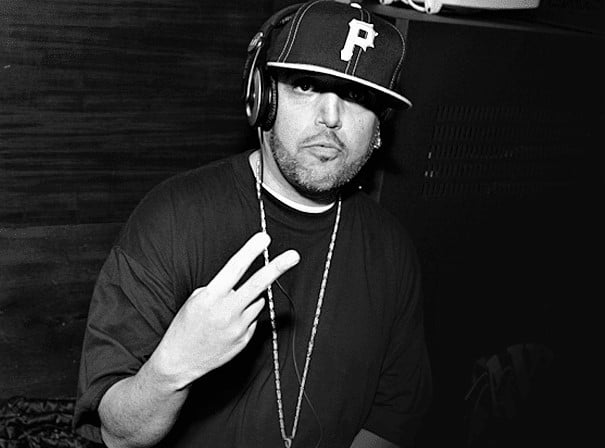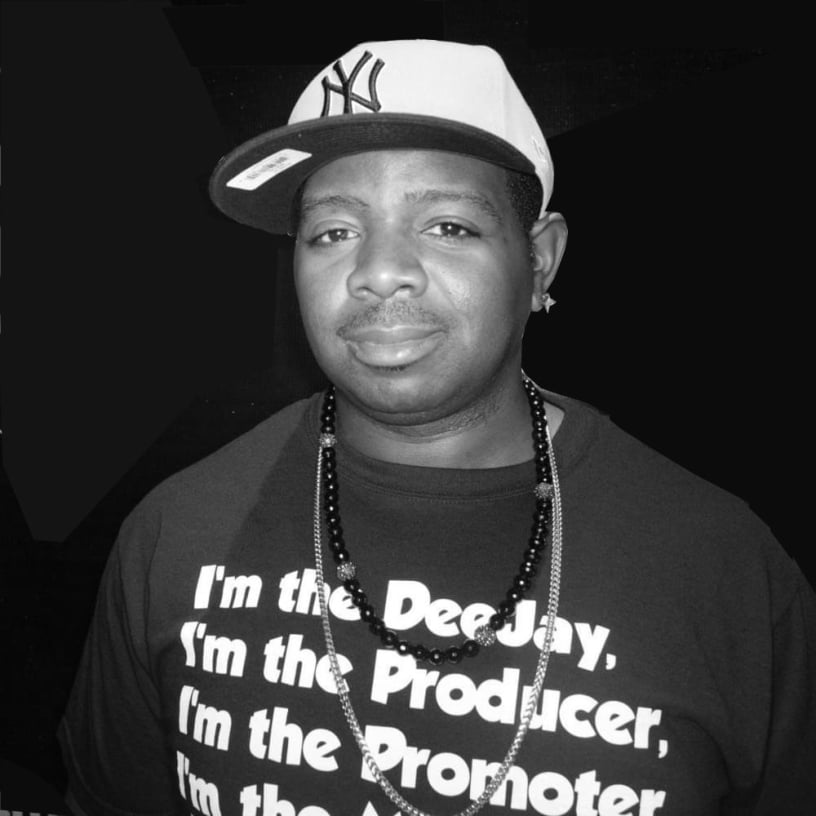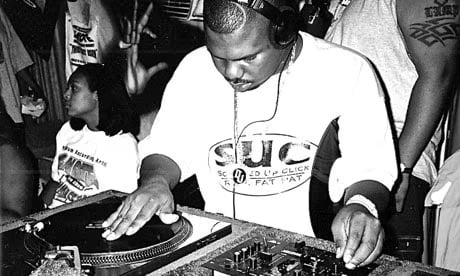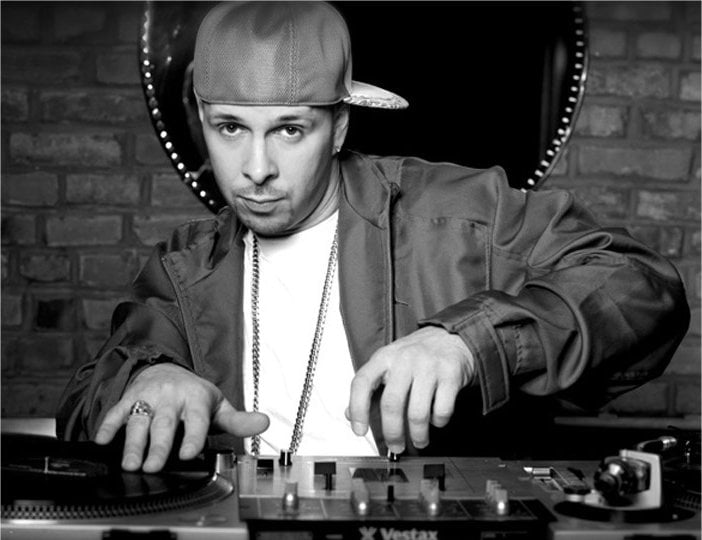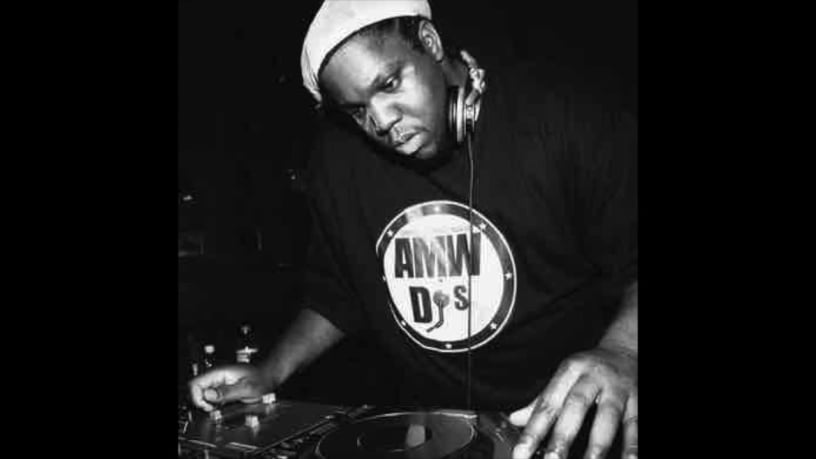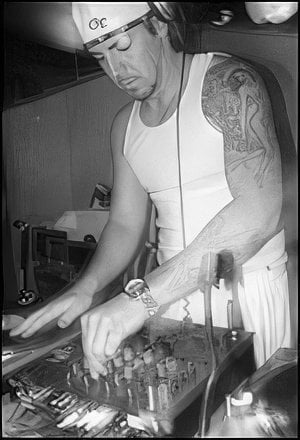
Few DJs embodied the entrepreneurial spirit of the New York mixtape scene more completely than Kid Capri. Born David Anthony Love Jr. in Brooklyn on 7th February 1967 and raised in the Bronx, Capri was already fascinated by turntables as a child.
He began DJing at the age of eight, eventually moving from block parties and neighbourhood venues into some of New York's most important clubs. By the late 1980s he was recording his sets onto cassette and selling them directly to the public, helping to establish the mixtape not merely as a recording of a DJ's work, but as a product with its own identity and value.
Capri's approach was different from simply putting two records together. His tapes had personality. His selections, introductions, talking, timing and sense of occasion became part of the experience. As he later explained, it was a combination of the music, what he said, how he said it, the lifestyle he projected and his timing that separated his tapes from those of other DJs.
He was selling cassettes for substantial sums at a time when the idea of paying $20 or more for a homemade tape could seem extraordinary. Yet people bought them because a Kid Capri tape represented access to the sounds, atmosphere and attitude of the New York streets. Yet people bought them because a Kid Capri tape represented access to the sounds, atmosphere and attitude of the New York streets.
Recommended Listening
• Old School Vol. 1 - c.1990
• Old School Vol. 2 - c.1990–91
• Old School Vol. 3 - c.1990–91
• 52 Beats - c.1992
• The James Brown Tape - early 1990s
• The Tape - 1991
• Soundtrack to the Streets - 1998
Born Ernesto Shaw Jr. on 8 January 1975 in Queens, New York, DJ Clue? became one of the defining figures of the mid-to-late 1990s mixtape explosion. His great innovation was recognising that exclusive material was the key to making a tape essential listening.
Through contacts in the record industry, Clue? gained access to advance and unreleased recordings and began putting them on his tapes before they reached radio or record shops. His shouted “Clue!” drop became one of the most recognisable sounds of the era.
His tapes also helped establish a new role for the mixtape: rather than simply replaying existing records, DJs could use them to break new music. Artists increasingly wanted their forthcoming songs and freestyles on Clue?'s tapes because of the enormous audience they reached.
His relationship with Roc-A-Fella and artists including Jay-Z was particularly important. By 1997 he had a regular show on Hot 97, and in 1998 released The Professional, a commercial album featuring Jay-Z, Nas, DMX, Mobb Deep and others.
Clue? helped transform the mixtape into a powerful promotional weapon. By the end of the decade, hearing something on a Clue? tape could be almost as important as hearing it on the radio.
Recommended Listening
• 4,5,6 (Goin' for Broke) - 1996
• Holiday Hold-Up - 1996
• Holiday Hold-Up II - 1997
• The Professional - 1998
• Desert Storm mixtape material - late 1990s
• Clue? Hot 97 mixes - late 1990s
DJ S&S (Shampelle Everette) was one of the most respected DJs in New York's street-mixtape scene during the 1990s. His reputation was built around exclusives, blends and new music, making his tapes an important source of information for hip-hop fans who wanted to hear what was coming next.
S&S became particularly important during the middle of the decade, when artists increasingly relied on mixtapes to circulate forthcoming records and freestyles. His tapes could contain material that was unavailable anywhere else, and he became known for breaking records by artists including The Notorious B.I.G., Snoop Dogg, Naughty by Nature and others.
His collaboration with DJ Craig G produced some particularly respected tapes, while his Bad Boy Mixtape series documented the rapidly developing Bad Boy sound. His 1996 Bad Boy Mixtape Vol. 4 is especially notable for its early version of The Notorious B.I.G.'s "Who Shot Ya?", which contained a longer Keith Murray verse.
By 1997 S&S had been recognised as Best Mixtape Personality at the Gavin Rap Awards. His importance was not simply technical. Like Clue?, he helped turn the mixtape into a kind of hip-hop news service, where listeners could hear new music before it became commercially available.
Recommended Listening
• Back To School Shit - 1993, with DJ Craig G
• Bad Boy Mixtape Vol. 4 - 1996
• It's Not A Game - 1998
• Harlem World Order - 1999
DJ Doo Wop emerged from New York's underground during the early 1990s and became one of the decade's most respected street DJs. His speciality was making a mixtape sound like a live hip-hop event, combining current records, freestyles, blends, remixes and energetic microphone work.
His 95 Live series became particularly important. The tapes captured New York hip-hop at a remarkable moment, bringing together artists such as The Notorious B.I.G., Nas, Wu-Tang Clan, Redman and M.O.P. They were not simply compilations: Doo Wop's mixing and presentation gave the tapes their own identity.
He also collaborated with other influential DJs and became an important figure in the network of New York mixtape culture. His work demonstrated how a DJ could become a recognisable personality whose name alone was enough to make a tape worth buying.
Doo Wop represents the classic street-mixtape DJ at his peak. Before the internet, listeners depended on DJs like him to discover new records, freestyles and emerging artists. His tapes were snapshots of New York hip-hop as it was happening.
Recommended Listening
• 95 Live Pt. 1 & 2 - 1995
• 96 Live - 1996
• 97 Live - 1997
• Doo Wop & Frankie Cutlass material
• Doo Wop live mixes - 1990s
DJ Ron G became one of the defining figures of the 1990s blend mixtape. His speciality was combining R&B vocals with hip-hop instrumentals, creating combinations that often sounded like entirely new records.
The concept was simple but brilliantly effective. Ron G would take a familiar vocal and place it over a completely different beat, giving listeners a version of a song they could not hear on commercial radio or on an official release.
His huge catalogue included series such as Blends, Back To School Shit, Blast From The Past, Dead Presidents and Ghetto D. His tapes demonstrated that the DJ could be more than a selector: he could effectively become a remixer and producer.
Ron G's influence was considerable because the blend format became one of the defining sounds of 1990s mixtape culture. His name became almost synonymous with this style, and his tapes circulated far beyond New York.
His work also illustrates how mixtapes could create something genuinely new from existing recordings. The best Ron G blends were not simply mash-ups; they demonstrated a strong understanding of rhythm, phrasing and the relationship between R&B vocals and hip-hop production.
Recommended Listening
• Blends Pt. 1 - The New Beginning
• Back To School Shit
• Blast From The Past
• Dead Presidents
• Dead Presidents 2
• Ghetto D
• Ron G Blends series - 1990s
Born Robert Earl Davis Jr. on 20 July 1971, DJ Screw became the most important DJ in the development of Houston's distinctive chopped-and-screwed sound.
During the early 1990s he developed a technique based on dramatically slowing records, repeating sections and manipulating vocals and beats. The resulting music had a hypnotic, heavy quality that became closely associated with Houston.
Screw's tapes were initially made for friends and local customers, but demand grew rapidly. Local rappers began appearing on his tapes to freestyle, eventually forming the Screwed Up Click. He produced hundreds of tapes during the 1990s, distributing them through his own network and eventually through the Screwed Up Records and Tapes store.
His 1996 June 27 is perhaps the definitive Screw recording: an extended freestyle session featuring numerous Houston rappers. It captures both his technique and the communal nature of the Screwed Up Click.
Screw's importance goes beyond mixtapes. He created a completely new musical language using little more than turntables, a mixer and cassette duplication. His influence eventually spread far beyond Texas.
Recommended Listening
• June 27 - 1996
• 3 'N the Mornin' (Part One)
• 3 'N the Mornin' (Part Two)
• All Screwed Up! - 1993
• Screwed Up Click freestyle tapes
• Other original 1990s Screw tapes
Born Joseph Anthony Hernandez on 2 July 1969 in Brooklyn, New York, Tony Touch became one of the most influential freestyle and mixtape DJs of the 1990s. He began releasing mixtapes around 1991 and developed a reputation for bringing together rappers from across New York's underground. His tapes covered hip-hop, reggae, R&B, house and Latin music, reflecting both his broad musical taste and his Puerto Rican heritage.
His defining achievement came in 1996 with Power Cypha: 50 MCs. It was Tony Touch's 50th mixtape, and he marked the occasion by bringing together 50 MCs for a series of raw freestyles over classic beats. The participants included KRS-One, Busta Rhymes, Guru, Kool G Rap, Jeru the Damaja, Inspectah Deck, Freddie Foxxx, Onyx and members of the Boot Camp Clik.
The concept was hugely successful. Power Cypha II followed in 1997, while Power Cypha III: The Grand Finale arrived in 1999, featuring another remarkable collection of MCs including Common, Q-Tip, Eminem, Black Star and many others. The first two 50 MCs tapes also won the Mixtape Awards' Best Freestyles award in consecutive years.
Tony Touch's importance lies in showing just how powerful a mixtape could be as a showcase for MCs. His tapes brought together artists who might otherwise never have appeared on the same project and captured the competitive, spontaneous spirit of 1990s hip-hop.
Recommended Listening
• Power Cypha: 50 MCs (1996)
• Power Cypha II: 50 MCs (1997)
• Five Deadly Venoms of Brooklyn (1997)
• Power Cypha III: The Grand Finale (1999)
• Can't Sleep on the Streets (1999)
DJ Evil Dee was already an established New York DJ when the 1990s began, but the decade saw him become particularly important through his work with Da Beatminerz and the underground hip-hop scene.
His mixtapes were rooted in hard beats, independent artists, freestyles and records that were often overlooked by mainstream radio. He had a particularly strong ear for the darker, more atmospheric side of New York rap.
His 1995 Last Day Of School, First Day Of Life!!! is a superb example, featuring Rakim, Special Ed, Ol' Dirty Bastard, Organized Konfusion, Redman, Masta Ace and others. Nasdee Bushwick Joint, also from 1995, brought together an extraordinary selection of contemporary New York artists.
In 1996, Fat Beats continued the formula with The Roots, M.O.P., Jeru the Damaja, A Tribe Called Quest, Large Professor, Sadat X and others.
Evil Dee also mixed the first Soundbombing compilation for Rawkus in 1997, helping establish the label's underground identity.
His work is important because it demonstrates that the 1990s mixtape wasn't solely about exclusives and promotion. It could also be a curated statement of taste, with the DJ directing listeners towards music they might otherwise miss.
Recommended Listening
• Last Day Of School, First Day Of Life!!! - 1995
• Nasdee Bushwick Joint - 1995
• Fat Beats - 1996
• Escape From Hell - 1997
• Soundbombing - 1997
Born Aston George Taylor Jr. in the Bronx, Funkmaster Flex grew up around music: his father was a sound-system DJ, and Flex bought his first turntables at 16. By the early 1990s he had established himself as a New York club and radio DJ, joining Hot 97 in 1992 and becoming the station's first major hip-hop DJ.
Flex's importance to mixtape culture came from recognising that the format could become a commercial product without losing its DJ identity. His 1995 The Mix Tape, Vol. 1: 60 Minutes of Funk, released through Loud Records, was one of the first major retail mixtape releases. It combined established records, freestyles, remixes and Flex's own production, reaching No. 15 on Billboard's R&B/Hip-Hop chart.
The success led to The Mix Tape, Vol. 2 in 1997 and Vol. 3 in 1998, both of which became gold records. In 1999, Flex teamed up with DJ Big Kap for The Tunnel, named after the legendary New York nightclub where Flex held his regular events.
Flex therefore occupies an important position in the history of the mixtape: he helped move it from a street-cassette culture into the mainstream record business, without removing the DJ's personality from the equation.
Recommended Listening
• The Mix Tape, Vol. 1: 60 Minutes of Funk - 1995
• The Mix Tape, Vol. 2: 60 Minutes of Funk - 1997
• The Mix Tape, Vol. 3: 60 Minutes of Funk - 1998
• The Tunnel - 1999, with DJ Big Kap
• Ghetto Classics: The Nervous Mix Tape - 1996
• Funkmaster Flex/Westwood Rap Exchange - 1995
Born Chris Oroc, DJ Babu emerged from the Los Angeles turntablist scene during the early 1990s and became one of the central members of the World Famous Beat Junkies. He brought an emphasis on scratching, beat juggling and technical turntable manipulation to the mixtape format, helping demonstrate that a cassette could showcase the DJ's skills as much as the records being played.
Babu's 1999 Comprehension is perhaps the clearest example. Distributed through Fat Beats, the cassette is essentially a showcase for Babu's turntablism rather than a conventional compilation. Its first side features chopped breaks, instrumental manipulation and a 1994 battle recording with DJ Shortkut, while the second side was produced and mixed by KanKick.
Babu has subsequently explained that Comprehension was also important in the history of the word “turntablism” itself. He used the term on a track featuring Melo-D and D-Styles, reflecting the Beat Junkies' belief that the turntable should be treated as a musical instrument.
His work provides an important contrast to the New York DJs whose tapes concentrated on exclusives and new releases. Babu's mixtapes were about what the DJ could actually do with records. By the end of the 1990s, he had helped establish turntablism as a serious art form within hip-hop.
Recommended Listening
• Comprehension - 1999
• Comprehension - Side A - Babu
• Comprehension - Side B - KanKick
• Babu vs. DJ Shortkut - 1994 Rapsheet battle
• Beat Junkies mixtapes - 1990s
• Early Babu turntablist mixes - 1990s
Born Scott Kluesner on 13 July 1970, DJ Rectangle emerged from the Los Angeles DJ scene in the early 1990s and quickly established himself as a formidable turntablist. His career combined battle records, technical scratching and full-length mixtapes, giving him a distinctive place in 1990s DJ culture. He won the 1993 DMC West Coast Championship and the 1994 US DMC Championship, confirming his reputation as one of America's leading battle DJs.
Rectangle was also remarkably prolific. His 1990s catalogue included Vanilla Dope (1992), Rollin' Deep, O.G. Style and Talkin Shit (1994), Vinyl Combat and Ill Rated (1995), The Tables Have Turned and Deadly Needles (1997), and The Lightning Fist (1998).
His style was heavily based around scratching, acapella drops, instrumental cuts and rapid transitions, but his mixtapes were also important for introducing listeners to West Coast material that might not otherwise have reached them. A retrospective on Deadly Needles particularly praised the way Rectangle kept the energy moving by weaving acapellas and instrumentals between tracks.
Deadly Needles is probably the best illustration of what made Rectangle special: it was a mixtape that could be enjoyed for the music while simultaneously functioning as a showcase for the DJ's technical ability. His work helped demonstrate that the 1990s mixtape could be a DJ performance in its own right.
Recommended Listening
• Vanilla Dope (1992)
• Rollin' Deep, O.G. Style (1994)
• Vinyl Combat (1995)
• Ill Rated (1995)
• Deadly Needles (1997)
• The Lightning Fist (1997/98)
DJ Juice was one of the most prolific and respected mixtape DJs of the mid-to-late 1990s New York scene. Closely associated with Tape Kingz, he built an extensive catalogue of cassettes that mixed contemporary hip-hop, R&B, blends, remixes and exclusives. By 1996 he was already deep into his numbered series, with Volume 30, Volume 31 and Volume 32 all appearing that year.
What made Juice particularly effective was his ability to move between hard New York hip-hop and R&B without the mix losing its identity. Volume 30, for example, brought together Mobb Deep, Biggie, Fat Joe, Raekwon and The Fugees alongside Mary J. Blige and D'Angelo, while Volume 31 combined artists including Busta Rhymes, Foxy Brown, Nas, Wu-Tang Clan and Aaliyah with Juice's own remixes and blends.
His output continued throughout the decade. Volume 34 appeared in 1997, followed by Volume 38 and Volume 41 in 1998. The latter included exclusive Juice remixes and material from Jay-Z, DMX, Redman & Method Man, Ghostface Killah, Foxy Brown, Noreaga and many others.
Juice's importance is that he represents the working mixtape DJ at his peak: prolific, technically accomplished and constantly supplying listeners with new music. His Tape Kingz catalogue is an excellent document of what New York hip-hop sounded like as the 1990s moved towards their close. He died in January 2025 aged 54.
Recommended Listening
• Volume 30 (1996)
• Volume 31 (1996)
• Volume 32 (1996)
• Volume 34 (1997)
• Volume 38 (1998)
• Volume 41 (1998)